Grade 5 Workshop |
Parrot Nutrition and Physiology |
Strand: Life Systems
Workshop Length: 60 Minutes |
| Specific Expectations Met: |
| Understanding Basic Concepts |
- Describe the basic physical structure of a parrot, including the skeleton and digestive system.
- Describe the diets of different species of parrots.
|
| Developing Skills of Inquiry, Design and Communication |
- Identify and formulate questions about parrot physiology and nutritional needs, and explore possible answers to these questions.
- Use appropriate vocabulary, including correct scientific terminology, in describing their investigations, explorations and observations (e.g. vertebrate, keel, crop, proventriculus)
|
| Relating Science and Technology to the World Outside School |
- Compare and contrast basic elements of parrot and human physiology.
- Compare and contrast the nutritional needs of parrots and humans.
- Describe an example of how medical technologies can be applied to both humans and parrots.
|
Workshop Overview: |
- The students will be introduced to the two parrots and provided with a brief workshop overview
- Using a highly interactive discussion format, the following topics will be covered:
- Parrot physiology:
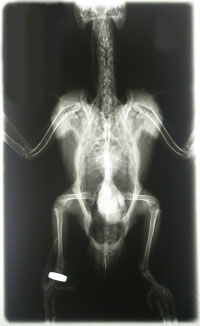
- Using the live parrots, a replica skull, an actual complete skeleton, x-rays and drawings as aids, we will examine the basic physical structure of a parrot, including the skeleton and digestive system. As these elements are discussed, we will compare and contrast parrot physiology with that of humans.
- The students will use magnifying glasses to carefully observe different types of feathers to understand their structures and roles. They will also have the opportunity to better understand how bird bones differ from those of humans by examining cross-sections of real chicken bones using the magnifying glasses.
- Parrot nutrition:
- We will examine the diets of parrots and then discuss why the birds require these types of foods.
- We will compare parrot diets to those of humans and discuss the effects of poor nutrition on parrots and people.
- Adapting medical technologies to help parrots:
- Using Dusty (the Moluccan Cockatoo) as an example, the students will see how human medical technologies can be adapted for birds. Dusty was the first bird in Canada to successfully wear braces to correct a beak deformity. (Click here to read her story.) The students will have the opportunity to see photos of Dusty's progress over the course of this very successful procedure, and examine the actual braces she wore.
- We will briefly review and summarize key learning points from the workshop, and then the students will have the opportunity to ask any additional questions they might have.
|